

学术资讯|中大珠海哲学论坛第118讲:古代的自由意志观
古代的自由意志观 (Free Will and God in Asia and the West)
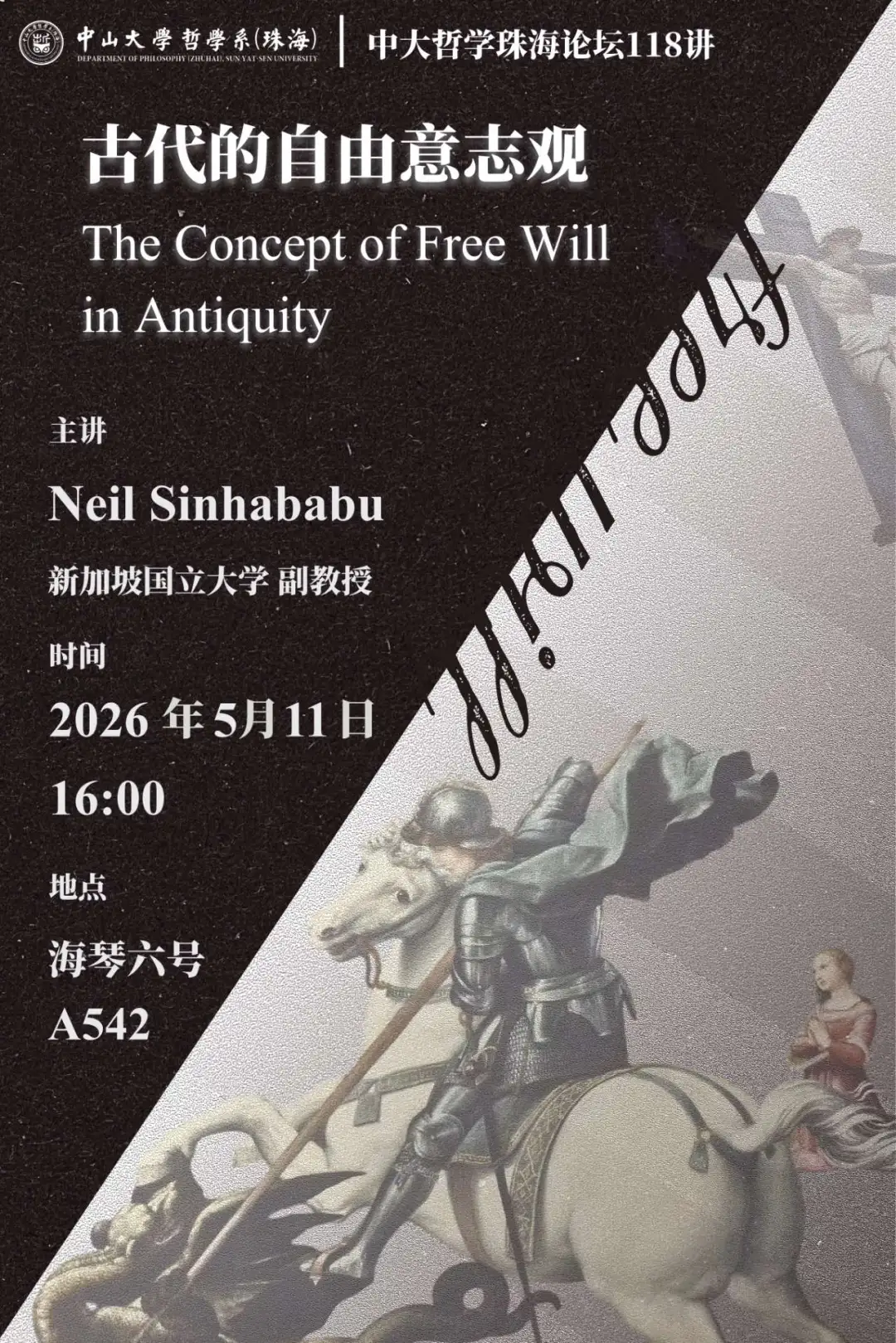
会议信息
1
主题
古代的自由意志观
(Free Will and God in Asia and the West)
2
主讲
尼尔·辛哈巴布
(NEIL SINHABABU)
新加坡国立大学哲学系副教授
3
主持
Itay Shani
中山大学哲学系(珠海)教授
4
时间
2026年5月11日16:00
5
地点
海琴六号A542
内容提要
西方哲学传统长期以来对自由意志的自由论(libertarianism about free will)抱有浓厚兴趣,而亚洲传统则历史上对此鲜有关注。对这一差异的解释,源于对儒家、墨家、道家、印度教、佛教、耆那教、琐罗亚斯德教、希腊、犹太教、天主教、加尔文宗、阿米念派、逊尼派、什叶派以及当代哲学传统的系统考察。只有基督教和伊斯兰教的神学需要调和上帝的完美性与世间邪恶以及地狱的存在。自由意志神义论(free will theodicy)借助自由论作为解决方案,将世间邪恶的责任从上帝转移到人类身上,并以地狱作为滥用自由意志的惩罚。这一历史脉络为世俗哲学家提供了去魅论证,既反对自由论,也反对“自由的正确行动具有至高重要性”这一观念——而这两者正是自由意志神义论的核心承诺。
While Western philosophical traditions have long taken interest in libertarianism about free will, Asian traditions have historically lacked interest in it. An explanation of the difference emerges from a survey of Confucian, Mohist, Daoist, Hindu, Buddhist, Jain, Zoroastrian, Greek, Jewish, Catholic, Calvinist, Arminian, Sunni, Shia, and contemporary philosophical traditions. Only Christian and Muslim theology requires reconciling God's perfection with worldly evil and the existence of Hell. The free will theodicy invokes libertarianism as a solution, making humans rather than God blameworthy for worldly evil, with Hell as a punishment for abusing free will. This history provides secular philosophers with debunking arguments against both libertarianism and the supreme significance of free right action, both of which are commitments of the free will theodicy.
主讲人信息
个人简介
尼尔·辛哈巴布(NEIL SINHABABU),美国人。1997年就读哈佛大学,2001年获哲学学士。2001-2008年就读于德克萨斯大学奥斯汀分校,获哲学博士学位。
工作履历
2008-2014新加坡国立大学,哲学系助理教授
2015至今 新加坡国立大学,哲学系副教授
主要论文
1. Possible girls, Pacific Philosophical Quarterly 89:2, 254-260.
2. Desire and aesthetic pleasure, Australasian Philosophical Review 1:1, 95-99.
3. Qualia share their correlates’ locations, Synthese 202:2, 1-14.
专著
1. Nietzsche on the Eternal Recurrence, Cambridge University Press.
2. Humean Nature, Oxford University Press.
个人网站
来源|哲珠新媒体
海报|欧阳欢
编辑|黄万豪
初审|韩 珩
审核|卢 毅
审核发布|屈琼斐
